Xbox Is in Danger: Will Microsoft Fix the Brand or Redefine It?
For years, Xbox was one of the biggest names in gaming. From the original Xbox to the Xbox 360 era, Microsoft built a strong brand with exclusive titles and online innovation. Xbox Live changed multiplayer gaming forever.
But today, things feel different.
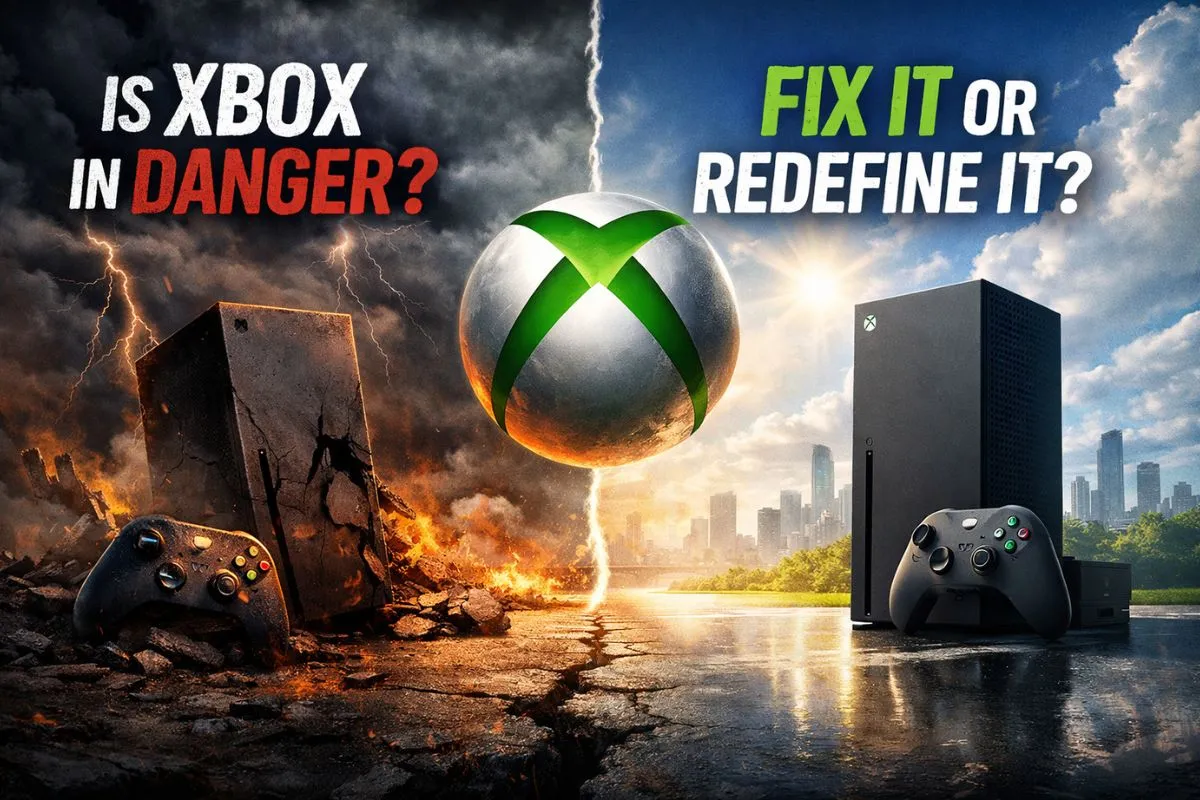
The question many gamers are quietly asking is simple: Is Xbox losing its identity? And if it is, will Microsoft fix the direction or slowly let the brand fade into something else?
Let’s look at the real situation.
The Hardware Problem: Strong Console, Weak Momentum
The current generation console, the Xbox Series X, is technically powerful. On paper, it competes directly with PlayStation 5. It runs games smoothly and supports strong backward compatibility.
The issue is not power. The issue is momentum.
PlayStation has consistently released strong exclusive titles that drive console sales. Xbox, on the other hand, has struggled with first-party releases. Delays and development challenges have slowed major titles.
When people buy consoles, they buy them for games. Without strong exclusives arriving consistently, hardware becomes harder to justify.
That doesn’t mean Xbox is failing. But it does mean it’s losing urgency.
Game Pass: A Brilliant Idea With Long-Term Risk
One thing Microsoft deserves credit for is Xbox Game Pass. It changed how many people access games. Instead of paying $70 per title, players can subscribe and play a large library.
This was a bold move. And in many ways, it worked.
Game Pass created value and made Xbox feel consumer-friendly. It also expanded to PC, giving Microsoft a broader reach.
However, the big question is sustainability. Subscription models require constant content. That means Microsoft must keep delivering high-quality games regularly.
If first-party titles underperform, Game Pass loses strength. If development costs keep rising, profit margins shrink.
Game Pass is powerful, but it cannot survive without strong games behind it.
Studio Acquisitions: Big Investments, Big Expectations
Microsoft has spent billions acquiring studios, including major publishers. The most notable example is the acquisition of Activision Blizzard.
On paper, this gives Xbox massive power. Franchises like Call of Duty, Diablo, and others now sit under Microsoft’s umbrella.
But owning studios is not the same as delivering hits.
Fans want to see what Microsoft does with these properties. Will they improve quality? Will they create new exclusive experiences? Or will these games remain platform-neutral?
The pressure is high. Big acquisitions mean big expectations.
Is Xbox Becoming Just a Service?
One major concern among longtime fans is identity.
In the past, Xbox felt like a console brand. Now it feels more like a service ecosystem. Microsoft is pushing Xbox Cloud Gaming, Game Pass, PC integration, and even releasing games on other platforms.
Recently, some Xbox exclusives have appeared on rival platforms. That move shocked parts of the community.
From a business point of view, it makes sense. More platforms mean more revenue.
But emotionally, it makes fans wonder: is Xbox still competing, or is it shifting away from the traditional console battle?
If Xbox becomes just a service available everywhere, the meaning of owning an Xbox console changes.
The Reality: Microsoft Is Not Killing Xbox
Despite concerns, it’s important to stay realistic.
Microsoft is one of the largest companies in the world. Gaming is a major revenue stream. They are not casually abandoning Xbox.
In fact, Microsoft leadership has repeatedly said gaming is central to their strategy.
The company appears to be reshaping Xbox, not destroying it.
The strategy seems clear:
-
Expand beyond console-only identity
-
Focus on services and subscriptions
-
Reach players wherever they are
This is evolution, not elimination.
The question is whether fans will accept that evolution.
What Microsoft Needs to Fix
If Microsoft wants Xbox to feel strong again, a few things matter:
-
Deliver consistent first-party hits.
-
Avoid long development delays.
-
Clarify long-term hardware commitment.
-
Keep Game Pass valuable without overpromising.
Gamers don’t just want access. They want confidence.
The Xbox 360 era worked because there was excitement. Big releases felt like events. That energy needs to return.
Final Thoughts: In Danger, But Not Finished
Is Xbox in danger?
In terms of market competition and brand identity. Yes, there are real challenges.
But is Microsoft going to kill Xbox?
No. That seems highly unlikely.
What we are seeing is a transition. Microsoft is trying to redefine what Xbox means in a world where gaming is no longer tied to one device.
The risk is losing the emotional connection fans once had.
The opportunity is building something bigger than a single console.
The next few years will decide which direction wins.
Xbox isn’t dying.
But it is changing, and change always makes people nervous.
Also Read:
Microsoft and Asus Open Xbox Ally Preorders — The X Costs $999