WhatsApp Calls Out Restrictions in Russia After Reported Slowdown
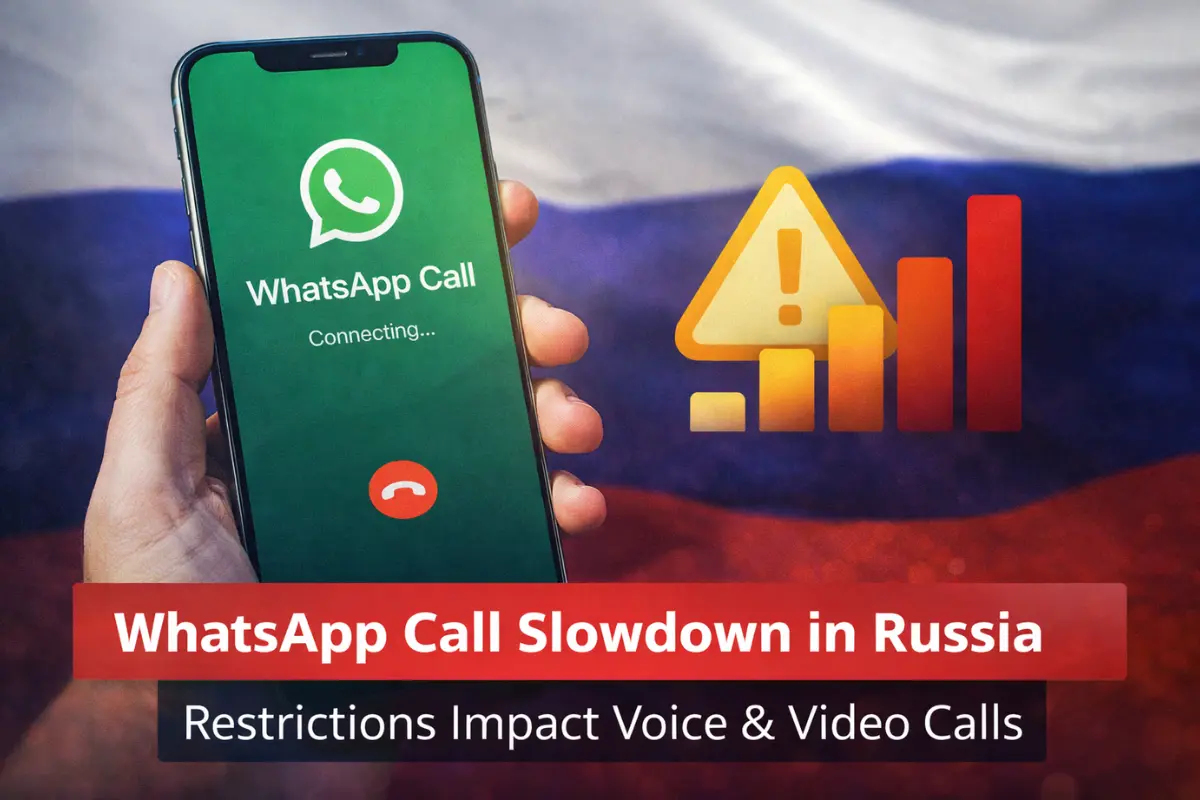
In recent days, millions of people around the world noticed something unusual: WhatsApp calls were slow, voice quality dropped, and some messages took longer to send. While users initially thought it was a regular app problem, it soon became clear that the issue was not a bug but a restriction affecting WhatsApp services in Russia. WhatsApp itself openly stated that the slowdown was connected to changes in how its services are allowed to operate in the country.
WhatsApp is one of the most popular messaging apps in the world and is especially important in Russia, where users rely on it for personal calls, business meetings, group chats, and staying connected with friends and family. When voice and video calling started performing poorly, it caught a lot of attention, and users began sharing screenshots and complaints across social media platforms. Many reported echoes, call drops, poor connections, and delayed messages.
Officials from WhatsApp publicly explained that recent local rules in Russia have led to technical restrictions that are affecting the app’s functioning. These changes have slowed down voice and video call performance on certain mobile networks and devices. Instead of blaming a server outage or network glitch, WhatsApp pointed out that the issue seems tied to regulatory actions and stricter local policies on communication platforms in the country.
What Exactly Happened to WhatsApp in Russia?
In simple words, Russia has introduced new rules that impact how foreign messaging apps operate within the country. These rules include requirements around data routing, storage, and how calls and messages are transmitted. Often, local laws push for more control over data flows and greater monitoring and sometimes mandate that services must use pre-approved local infrastructure to operate freely.
According to reports from users and experts, these new regulations have required WhatsApp to adjust how calls are routed across networks. Instead of using global servers that are optimized for speed and quality, WhatsApp calls may now be partially rerouted through local data centers or checkpoints that inspect and control traffic. This additional processing can increase lag, meaning voice and video calls feel delayed or choppy.
For the average WhatsApp user, the experience translates to:
-
Calls that don’t connect instantly
-
Audio that sounds distant, delayed, or unclear
-
Calls are dropping out without warning
-
Video calls appear blurry or freeze
Because WhatsApp traffic is encrypted end-to-end, officials cannot see the actual message content. However, they can still control the route and handling of signals and data packets, and that control seems to be the key factor in today’s slowdown.
Why WhatsApp Had to Speak Publicly
WhatsApp does not usually comment on every minor performance issue that users face. But this time was different for a few reasons:
-
Scale of user complaints: Millions in Russia noticed the difference, and the topic trended on social platforms.
-
Impact on communication: Many users depend on WhatsApp for work, family calls, and daily life. A sudden change in service quality quickly became a public concern.
-
Regulatory transparency: Instead of hiding or downplaying the cause, WhatsApp openly explained that the slowdown stemmed from external restrictions. This transparency helped users understand that the problem wasn’t their devices or local networks.
By calling out the restrictions, WhatsApp made a clear statement: the app’s performance is tied not just to technology but also to how governments regulate digital communication services.
How Users Are Reacting
Reactions have been mixed. Many people in Russia and neighboring regions have expressed frustration. Users shared comments like
-
“Calls were perfect last week; now it feels like dial-up internet.”
-
“I rely on WhatsApp for work calls; this slowdown is hurting business.”
-
“Why should my calls be slower just because of rules?”
At the same time, some users say they understand that governments have the right to regulate digital services for safety, security, or legal reasons. Still, they want a balance where regulation doesn’t hurt everyday usability.
Tech experts and privacy advocates also weighed in, pointing out that while security and data laws can be important, heavy-handed restrictions may negatively impact user experience and digital freedom.
What It Means for the Future
The slowdown highlights a bigger question about how global tech services operate in different countries. Messaging apps like WhatsApp, Telegram, Signal, and others have always balanced between:
-
Providing fast, secure communication
-
Complying with local laws and regulations
This situation in Russia may set a precedent for how governments and tech companies negotiate technical rules. If more countries adopt similar restrictions:
-
Other apps may face similar slowdowns
-
Users might lose confidence in global communication services
-
Developers may need new solutions for local compliance without hurting performance
Some industry analysts suggest that tech companies might need regional servers that can smartly balance privacy and compliance without slowing down core features like connectivity and quality calls.
Simple Tips for Users Facing Slow WhatsApp Calls
If you’re experiencing poor WhatsApp call quality, especially in regions with new restrictions like Russia, here are some tips that may help improve your experience:
-
Use Wi-Fi instead of mobile data: Home or office Wi-Fi may route traffic more efficiently.
-
Switch between networks: Try toggling between 4G, 5G, and Wi-Fi to see which gives better call quality.
-
Restart the app or phone: Sometimes a fresh start helps reset connections.
-
Update WhatsApp: Make sure you’re using the latest version from the official store.
-
Try a VPN (carefully): For some users, a reliable VPN can improve call routing, but watch local laws on VPN use.
Remember, these tips may help with performance, but they won’t fully solve the slowdown if the issue is caused by external restrictions.
End Thoughts
WhatsApp’s call restrictions in Russia after a reported slowdown are more than just a technical issue. It is a reminder that communication tools we often take for granted are influenced not just by technology, but also by policy, regulation, and digital governance.
For users, this means staying informed about both the tools we use and the rules that affect them. For tech companies, it means finding better ways to keep services fast, secure, and compliant with local laws without hurting user experience.
As tech continues to grow and connect the world, the conversation around performance, privacy, and regulation will only become more important.
FAQs:
7 Important FAQs (SEO-Friendly)
1. Why is WhatsApp slowing down in Russia?
WhatsApp says the slowdown is linked to new restrictions that affect how calls and data are routed inside Russia.
2. Are WhatsApp messages blocked in Russia?
Messages are not fully blocked, but some users report delays and reduced call quality.
3. Is the slowdown caused by a WhatsApp bug?
No. WhatsApp clarified it is not a technical bug but an external restriction issue.
4. Are voice and video calls affected the most?
Yes, voice and video calls are seeing the biggest impact, including lag and call drops.
5. Can users fix the WhatsApp slowdown themselves?
Only limited fixes are possible, like switching networks or using Wi-Fi, but restrictions remain the main issue.
6. Is WhatsApp banned in Russia?
No, WhatsApp is still available, but its performance is affected by regulatory controls.
7. Could other messaging apps face similar issues?
Yes, any foreign messaging app could face similar slowdowns under the same rules.
RemoveWindowsAI: How to Disable or Remove AI Features from Windows Safely