Local AI vs Cloud AI: Which Is Safer?
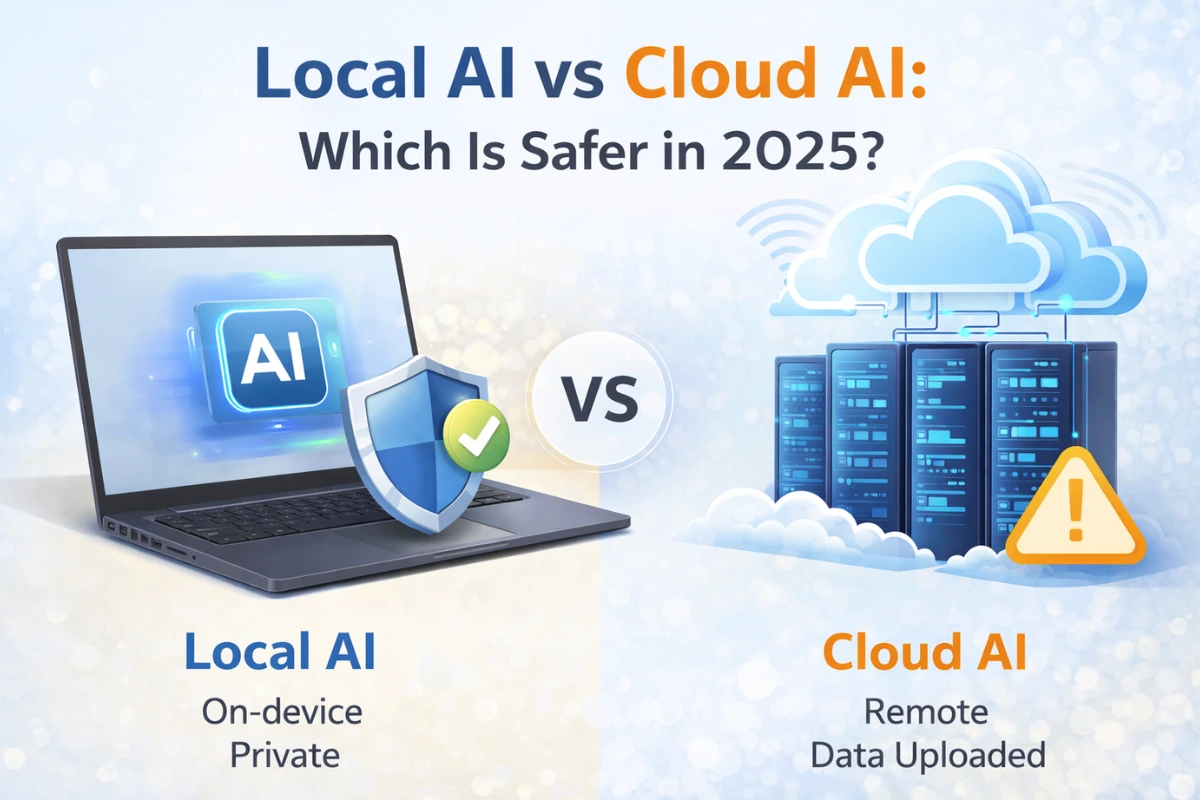
Artificial intelligence is now part of daily life. We see AI in phones, laptops, websites, office software, customer support, and even inside operating systems. In 2025, one big question many users are asking is, “Local AI vs. Cloud AI: which one is actually safer?” Safety here does not mean only hacking. It also includes privacy, data control, reliability, and long-term trust.
This article explains both local AI and cloud AI in simple, normal words, so anyone can understand the difference and decide what is safer for their use.
What Is Local AI?
Local AI means the AI runs directly on your device. This could be your laptop, desktop, phone, or even a local server. The AI model is downloaded once and then works offline or semi-offline. Your data stays on your machine.
Examples of local AI include:
-
Offline AI chat tools
-
AI image or video tools running on your PC
-
On-device AI features in phones
-
AI models running on local GPUs or CPUs
In Local AI, your files, prompts, and inputs usually never leave your device unless you choose to upload them.
What Is Cloud AI?
Cloud AI runs on remote servers owned by companies. You send your data to the cloud, the AI processes it there, and the result comes back to you.
Examples of cloud AI include:
-
Online AI chatbots
-
Cloud-based image generators
-
AI tools inside web apps
-
AI assistants connected to online accounts
In Cloud AI, your data travels over the internet and is processed on external servers.
Data Privacy: The Biggest Difference
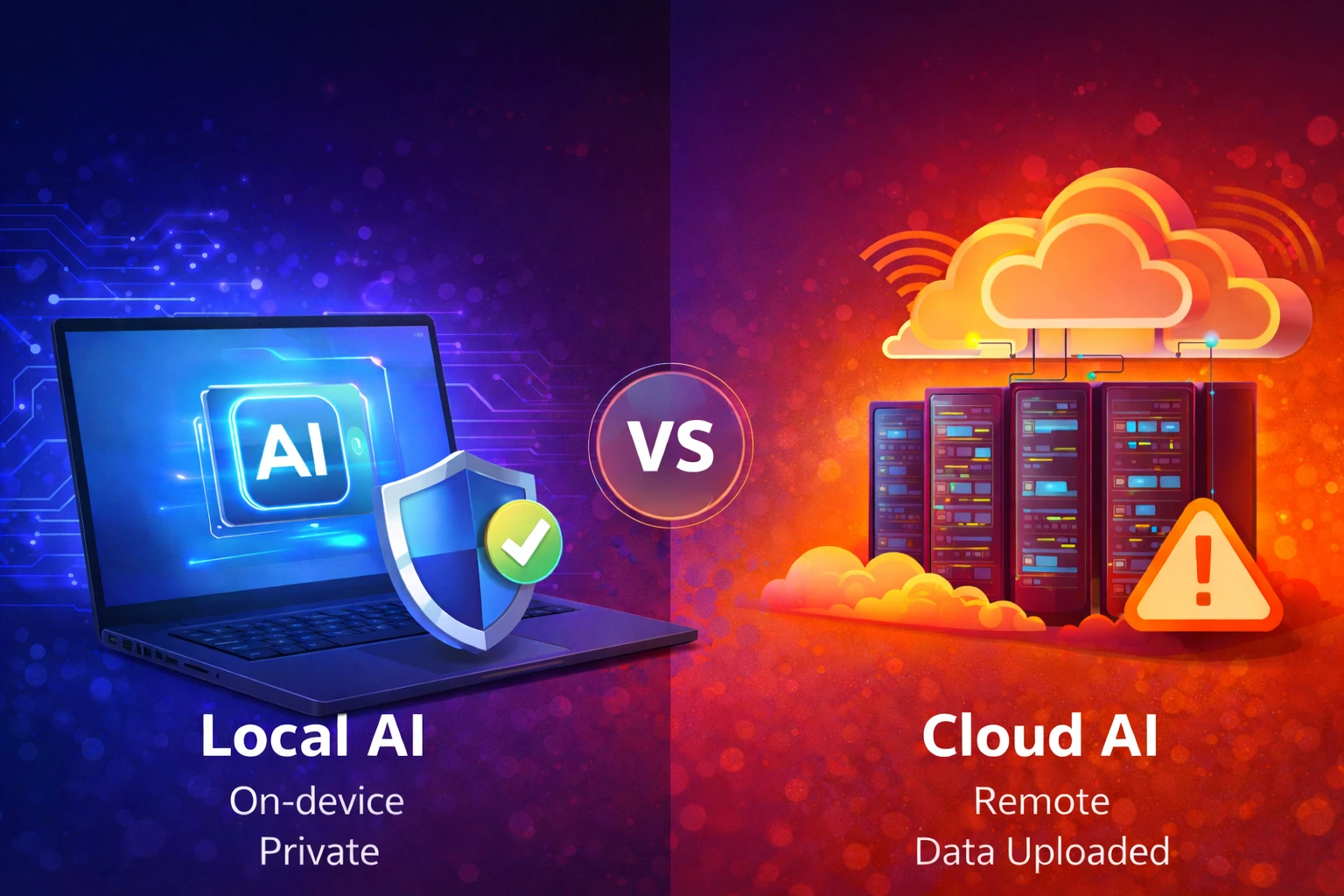
When it comes to safety, privacy is the biggest concern.
With Local AI, your data stays with you. Files, text, images, or commands are processed on your own system. This means:
-
No third-party access by default
-
No data stored on company servers
-
Less risk of data misuse
-
More control over sensitive information
With Cloud AI, your data must be sent to the provider’s servers. Even if companies say data is encrypted or deleted, users still depend on:
-
Company privacy policies
-
Server security
-
Data handling promises
-
Government or legal access requests
In 2025, privacy-aware users strongly prefer local AI because you don’t have to trust anyone else with your data.
Security Risks: Local vs Cloud
Local AI Security
Local AI is safer in terms of exposure, but it is not perfect. Risks include:
-
Malware on your device
-
Poorly configured systems
-
Unsafe AI model downloads
However, these risks are fully under your control. If your system is secure, Local AI is very hard to spy on.
Cloud AI Security
Cloud AI faces larger attack surfaces:
-
Centralized servers are big targets
-
Data breaches affect millions at once
-
Insider access risks
-
Account hijacking
Even large companies have faced breaches. When Cloud AI fails, users have no control over the damage.
Internet Dependency and Reliability
Local AI often works offline or with minimal internet use. This gives:
-
Better reliability
-
No service downtime
-
No forced updates
-
No sudden feature removal
Cloud AI requires internet. If the service is down, rate-limited, banned, or changed, users are stuck.
In 2025, many users are tired of tools disappearing or becoming paid suddenly. Local AI avoids this issue.
Performance and Speed
Cloud AI can be very powerful because it runs on massive servers. For heavy tasks, it may still be faster than local machines.
But local AI has improved a lot:
-
Modern CPUs and GPUs handle AI well
-
AI models are optimized for local use
-
No network delay
-
Faster response for small tasks
For daily tasks like writing, coding, summarizing, or image editing, Local AI feels faster and smoother because there is no waiting for servers.
Cost and Long-Term Safety
Cloud AI usually comes with:
-
Monthly subscriptions
-
Usage limits
-
Pay-per-request pricing
-
Sudden price changes
Local AI usually has:
-
One-time hardware cost
-
Free or open-source models
-
No usage limits
-
No surprise bills
From a long-term safety point of view, local AI is financially safer because you are not locked into a service.
Control and Transparency
Local AI gives users full control:
-
You choose the model
-
You choose updates
-
You decide what data is used
-
You can stop or delete it anytime
Cloud AI limits control:
-
Models change without notice
-
Features can be removed
-
Rules and filters are enforced
-
Data handling is not fully visible
In 2025, trust matters more than features. Users want tools they understand and control.
Compliance and Legal Concerns
For businesses, safety also means legal compliance.
Local AI helps with:
-
Data protection laws
-
Client confidentiality
-
Internal security policies
-
Reduced compliance risk
Cloud AI can create problems:
-
Data stored in unknown locations
-
Cross-border data issues
-
Legal access by third parties
-
Policy changes without consent
This is why many companies in 2025 are moving AI workloads back to local systems.
When Cloud AI Is Still Useful
Cloud AI is not bad in every case. It is still useful when:
-
You need very large models
-
Hardware is limited
-
Collaboration is required
-
Tasks are not sensitive
For public content, brainstorming, or general research, Cloud AI can still be fine.
Which Is Safer in 2025?
In 2025, local AI is clearly safer than cloud AI for most users.
Local AI wins in:
-
Privacy
-
Data control
-
Security
-
Reliability
-
Cost stability
-
Long-term trust
Cloud AI is still useful, but it comes with privacy risks, dependency, and control loss.
The future trend is clear:
👉 Sensitive work goes to Local AI
👉 Casual tasks may stay on Cloud AI
Users are no longer impressed by AI alone. They want safe, private, and controllable AI. That is why local AI adoption is growing fast in 2025.